

Buying guide · silent piano
Silent piano: Kawai or Yamaha?
A silent piano is a real acoustic piano that can also be played silently on headphones. Kawai and Yamaha make most of them. Here is how their systems differ – and which suits your home.
Ad · this guide contains affiliate links. If you buy through a link, ZOZIZA may earn a commission. Your price is the same.
How a silent piano works
By day you play as on any piano. In the evening you pull a lever: a rail stops the hammers just before the strings, sensors read the keys, and you hear a digital grand in your headphones. The keys feel almost the same; many notice they become slightly lighter in silent mode, and most get used to it within days.
Kawai: AnyTimeX and AURES 2
| System | What it does |
|---|---|
| AnyTimeX 3 Light | The simple version: hammer stop and headphones. |
| AnyTimeX 4 | 90 voices, Bluetooth MIDI and audio, and sensors that read the hammer instead of contacts under the keys. |
| AURES 2 | Hybrid: digital sound through the piano's own soundboard, so you can turn the volume down instead of off. |
Yamaha: SC3, SH3 and TransAcoustic
| System | What it does |
|---|---|
| SC3 Silent | Compact silent system with 12 voices and Bluetooth. |
| SH3 Silent | 25 voices incl. Yamaha CFX and Bösendorfer Imperial grands, plus a USB audio recorder. |
| TransAcoustic (TC3/TA3) | Hybrid: digital sound through the soundboard with adjustable volume – or silently on headphones. |
The difference you can feel
Both brands use the same actions as their regular pianos, so the main difference is in tone and touch rather than in the silent system. Kawai uses the carbon-fibre Millennium III action and often sounds warm and soft; Yamaha usually sounds brighter and clearer. Choose a hybrid (AURES 2 or TransAcoustic) if you want to play quietly without headphones.
Six models to compare
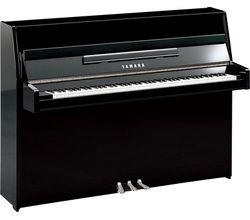
Yamaha b1 SC3
- 109 cm upright
- Yamaha SC3 Silent: hammer stop + headphones
- 12 voices, Bluetooth MIDI/audio
44.990 kr checked 30.9.2026
See price at Thomann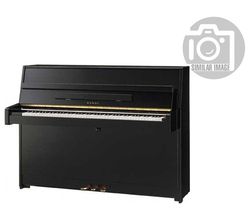
Kawai K-15 ATX 3-L
- Acoustic piano with AnytimeX-3 Light
- Can be played silently with headphones
- 88 keys, 3 pedals, 196 kg
46.590 kr checked 30.9.2026
See price at Thomann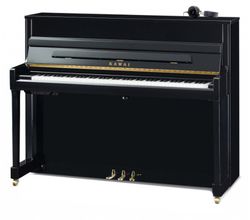
Kawai K-200 ATX4
- 114 cm
- Kawai AnyTimeX4: 90 voices, Bluetooth MIDI/audio
- Hammer sensing (IHSS) — no contacts under the keys
56.400 kr checked 30.9.2026
See price at Thomann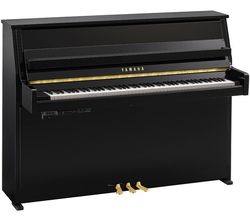
Yamaha B10 TC3 TransAcoustic
- Digital sound played through the piano's own soundboard — at adjustable volume
- Can also be played silently on headphones
- 12 voices, Bluetooth
57.400 kr checked 30.9.2026
See price at Thomann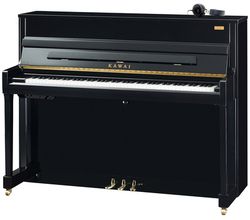
Kawai K-200 AURES 2
- 114 cm
- Digital sound through the piano's own soundboard — or silent on headphones
- Black, polished
69.200 kr checked 5.10.2026
See price at Thomann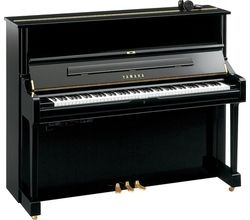
Yamaha U1 SH3 Silent
- Yamaha U1 with SH3 Silent System
- 25 sounds (incl. CFX and Bösendorfer Imperial)
- USB audio recorder, Bluetooth MIDI/audio, 121 cm
108.700 kr checked 5.10.2026
See price at ThomannSee every model on the silent piano page or in the catalogue.
Try this tomorrow
Practise the same piece for ten minutes out loud and ten minutes on headphones. Notice where you listen most to the tone – it tells you whether a hybrid matters to you.
Questions
Is Kawai or Yamaha silent better?
Both are good. The difference is mostly tone and touch: Kawai is often warmer, Yamaha brighter. Choose the system by need: AnyTimeX/SC3 for silent practice, SH3 for the most voices, AURES 2/TransAcoustic for hybrid.
Does a silent piano need tuning?
Yes, like any acoustic piano – usually once or twice a year.
What is the difference between silent and hybrid?
Silent stops the hammers and sends sound to headphones. Hybrid can also play the digital sound through the soundboard at adjustable volume.
More guides: Silent piano · Acoustic piano · Best digital piano for beginners